How a Residential Electrician Handles Panel Upgrades
A panel upgrade sits at the intersection of safety, capacity, and practicality. Homeowners usually start thinking about it because something feels off. Breakers trip when the microwave and toaster run together. A new heat pump is on the wish list, but the existing service is already crowded. An insurance carrier asks about the age and type of electrical equipment. Sometimes the problem is less dramatic. The house simply outgrew the panel it was born with.
From the outside, a panel upgrade can look straightforward. Remove the old box, install a bigger one, label a few circuits, restore power. In the field, it is rarely that simple. A good Residential Electrician approaches panel work like a careful diagnosis followed by surgery. There is planning before tools come out, coordination with the utility and local inspector, and a lot of decisions that affect how the home will function for the next twenty or thirty years.
The difference between a clean, durable upgrade and a rushed swap usually comes down to judgment. Not every old panel must be replaced immediately. Not every home needs 200 amps. Not every “full panel” requires a service upgrade. Knowing where to draw those lines is what separates solid electrical work from expensive guesswork.
Why panel upgrades come up in the first place
Many older homes were built around lighter electrical demand. A 60-amp service once fed a house with a few lighting circuits, one kitchen small-appliance circuit, maybe a window AC, and a gas furnace. Today that same house might have an induction range, electric dryer, dishwasher, disposal, garage freezer, tankless water heater, EV charger, and a home office full of electronics. Even if the wiring is still physically intact, the service may no longer fit the load profile.
There are also equipment-specific reasons. Some panels have a poor reputation due to failure rates, overheating, or breaker issues. In those cases, a Residential Electrician is not just chasing convenience. The work becomes a risk-management decision. I have seen homeowners postpone replacement for years because “nothing seems wrong,” only to discover corrosion, scorched bus bars, or loose neutral terminations once the cover comes off. Electrical systems can hide trouble well.
Then there is the remodeling factor. Additions, finished basements, kitchen renovations, hot tubs, and EV chargers often trigger a closer look at the service. A permit review may reveal that the existing panel is out of space, lacks sufficient ampacity, or cannot meet current code requirements for the new work. That is often the moment when a modest remodel turns into a broader conversation about the house’s electrical backbone.
The first visit is not about selling a bigger panel
A competent electrician does not start by quoting a replacement just because the panel looks old. The first step is assessment. That means reading the panel label, checking the service rating, looking at breaker count, inspecting conductor sizes, and studying how the home is actually using power. It also means looking beyond the panel itself.
The meter base matters. The service entrance cable matters. The grounding electrode system matters. If the panel is upgraded but the meter socket is damaged or the grounding is incomplete, the job is only half done. In older homes, the electrician may also find open splices, doubled neutrals where they should not be, circuits with mixed wire sizes, or previous handyman alterations that complicate everything. What the homeowner sees as a “panel job” can easily become a system correction.
Load calculation plays a big role here. There is a persistent myth that a large house automatically needs 200 amps and a small one does not. Real sizing is more nuanced. Electric heat, electric water heating, cooking equipment, AC tonnage, dryer load, EV charging, and demand factors all affect the calculation. A well-equipped 1,400-square-foot home can put more strain on a service than a 2,600-square-foot home with gas appliances. The electrician has to evaluate the actual load, not just the square footage.
At this stage, a Residential Electrician is also listening. Are the owners planning solar next year? Do they want a workshop in the garage? Is a heat pump replacing a gas furnace? Are they considering battery backup? These future plans influence whether the smart move is a like-for-like panel replacement, a main panel upgrade, or a more strategic redesign with subpanels and dedicated spaces for expansion.
Signs the panel needs more than a cosmetic refresh
Some warning signs are obvious. Others are subtle enough that people ignore them until they become recurring problems.
- Breakers trip repeatedly under ordinary use, not just during isolated overloads.
- The panel contains obsolete or problematic equipment that insurers and inspectors frequently flag.
- There is visible rust, heat damage, arcing marks, or a burnt odor near the panel.
- The home has no room for required new circuits, or relies on questionable tandem breakers to squeeze them in.
- Major new loads such as EV charging, electric heat, or a hot tub are being added to an already strained service.
Even those clues need interpretation. A tripping breaker might point to a short or overload on one branch circuit, not a whole-service problem. A panel that looks full may still support a subpanel if the service capacity is adequate. On the other hand, a panel with spare spaces can still be undersized overall. This is why real diagnosis matters more than visual assumptions.
Sorting out replacement versus service upgrade
People often use “panel upgrade” to mean several different things. Sometimes the electrician is replacing an aging panel with a new one of the same amp rating. Sometimes the service is increasing from 100 amps to 200 amps. Sometimes the existing main equipment remains, but a subpanel is added to create circuit space. Those are very different scopes, with different prices, schedules, and utility requirements.
A same-size replacement is often the least disruptive path when the existing service capacity still makes sense. If a 100-amp service adequately supports the home’s real load and there are no major expansion plans, a clean new 100-amp panel can be a perfectly sound solution. It improves reliability, labeling, breaker availability, and safety without forcing unnecessary utility-side upgrades.
A true service upgrade is broader. Increasing from 100 to 200 amps may involve a new meter socket, service entrance conductors, weatherhead or mast work, grounding upgrades, and utility coordination. In some neighborhoods, the utility transformer and service drop arrangement also factor into scheduling. This is why estimates can vary so widely from house to house. The panel itself is only one part of the assembly.
Then there are edge cases. I have seen homes where the panel was technically 200 amps, but the bus was maxed out with no practical room for expansion. In that case, adding a subpanel was cleaner than tearing out perfectly good equipment. I have also seen very old homes where branch circuit conditions were so poor that a panel replacement alone felt like putting a new door on a crumbling frame. An honest electrician has to explain when the requested scope solves the real problem and when it only disguises it.
What the planning phase actually involves
Once the scope is clear, the planning gets serious. A panel change requires timing, paperwork, and a sequence that keeps the home offline for as short a window as possible. The electrician pulls permits where required, confirms utility procedures for disconnect and reconnect, orders the correct equipment, and maps the circuits before shutdown day.
Circuit mapping is more important than most people realize. In a neat world, every breaker is accurately labeled and every branch circuit enters the panel in a predictable way. In older homes, labels can be wrong, multi-wire branch circuits may be poorly identified, abandoned conductors can still be present, and additions may have been tied in without much logic. A careful electrician spends time tracing, testing, and documenting before the old panel is removed. That preparation saves hours later and reduces the risk of reconnection errors.
Equipment selection also deserves attention. Not every panel brand, breaker style, or enclosure layout fits every job equally well. Wire bending space, available breaker types, surge protection options, and outdoor or indoor rating all matter. If the homeowner is likely to add an EV charger or generator interlock, planning for that now is cheaper than forcing it later. Good installers think beyond passing today’s inspection.
Grounding and bonding are another major piece. In older houses, these details are often missing, improvised, or no longer compliant. Water pipe bonding may be incomplete. Ground rods may be absent or poorly connected. Neutrals and grounds may be landed together in places where they should be separated, especially if a subpanel was added sometime in the past. Fixing these issues is not flashy, but it is central to how the system clears faults and stays safe.
The day of the upgrade
On job day, the pace is deliberate. The goal is not speed for its own sake. The goal is controlled efficiency with no shortcuts. Power is shut off, the panel is made safe, and the electrician verifies that circuits are de-energized before disconnecting anything. This is not a place for assumptions. A mislabeled feed or backfed conductor can create a serious hazard.
The old panel is then removed in a sequence that keeps conductors organized. In homes with short existing wires, the installer may need to extend branch circuits into the new enclosure using approved splicing methods. If the wall surface is damaged, patching or mounting adjustments may be needed to create a clean, accessible installation. Panels are not supposed to be buried, pinched into impossible corners, or tucked behind future cabinetry. Working clearance and accessibility rules exist for a reason.
Once the new panel is mounted, the electrician rebuilds the system circuit by circuit. This is where workmanship shows. Conductors are routed neatly, grounds and neutrals are terminated correctly, cable entries are protected, and breaker sizes are matched to conductor ampacity and circuit purpose. Multi-wire branch circuits, if present, require proper handle ties or common-trip breakers depending on configuration. AFCI and GFCI requirements are addressed where the permit scope or local code interpretation calls for them.
Labeling happens as part of the work, not as an afterthought. A useful directory says more than “lights” or “plugs.” It identifies locations in terms a homeowner can understand. “Kitchen counter outlets,” “north bedroom receptacles,” or “air handler” is better than vague shorthand. Clear labeling helps future service and makes emergencies easier to manage.
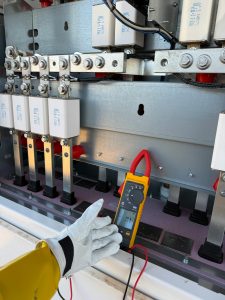
After reconnection, testing begins. The electrician checks voltage, verifies major loads, confirms breaker operation, tests GFCI and AFCI devices where applicable, and watches for signs of imbalance or abnormal heating. This is the moment when hidden branch-circuit issues sometimes surface. A panel upgrade can expose weak connections downstream that had gone unnoticed. A good electrician anticipates that possibility and explains it ahead of time so the homeowner is not blindsided if a legacy problem appears after the panel work is complete.
What can complicate a seemingly simple job
No two older homes behave the same way. Some panel upgrades run cleanly and finish the same day without surprises. Others reveal a decade of layered shortcuts.
Aluminum branch wiring is one example. Its presence does not automatically require a full rewire, but it changes the conversation. Terminations, devices, and repair methods need closer scrutiny. A split-bus panel is another. Some electricians and homeowners are comfortable leaving certain older equipment in service if it is functioning and code-compliant for the existing installation, but others prefer replacement because of age, configuration, and future limitations.
Service location can complicate things too. If the panel is in a finished basement, access may be tight. If the service mast is deteriorated, roof work may become part of the scope. In attached garages, clearance around stored items is often a problem. In coastal or damp environments, corrosion is more common than people expect, particularly around meter bases and exterior disconnects.
Permitting and utility logistics can also stretch timelines. In some areas, disconnect and reconnect scheduling is routine. In others, lead times can be frustrating. A seasoned Residential Electrician builds that reality into the schedule and sets expectations early. Homeowners care less about hearing that a job is “simple” than they do about getting a realistic timeline and knowing when their power will be off.
Cost is shaped by more than amperage
Homeowners understandably want a fast price, but panel upgrades do not lend themselves to one-size-fits-all numbers. A straightforward indoor 100-to-100 panel replacement with good access and no major corrections costs far less than a 100-to-200 service upgrade that includes meter work, grounding improvements, exterior conduit, permit fees, and utility coordination.
Labor can swing sharply based on branch circuit condition. If the old wires are too short to reach the new panel cleanly, the electrician may spend hours extending and reorganizing conductors. If circuits are unlabeled or mixed chaotically, troubleshooting time rises. If code-required protective devices add cost at the breaker level, that matters too. Brand selection, regional labor rates, and permit structures also affect the final number.
There is a tendency to compare panel upgrade bids strictly on price. That can be risky. One quote may include grounding corrections, surge protection, permit handling, utility coordination, and detailed labeling. Another may assume a very narrow scope and leave all those items out. The cheapest number on paper can become the most expensive job once omissions start surfacing.
How homeowners can prepare before work starts
A little preparation makes the upgrade smoother and shortens downtime. Most electricians appreciate a site that is easy to access and a homeowner who knows what loads absolutely must come back online first.
- Clear the area around the panel and meter so the crew has safe working space.
- Identify medical devices, internet equipment, sump pumps, or refrigeration needs that may require special planning.
- Save computer work and expect several hours without power, sometimes longer if utility scheduling changes.
- Ask for a plain-language explanation of what is included, especially meter work, grounding, permits, and any code-triggered breaker changes.
- Keep a note of future plans such as EV charging or HVAC changes so panel space can be allocated intelligently.
That last point matters more than it seems. I have seen brand-new panels installed with no thought for an EV charger that arrived six months later, forcing awkward rearrangement. Spare capacity is cheap on upgrade day and inconvenient later.
The inspection is not just a box to check
A lot of homeowners view inspection as a bureaucratic formality. In solid electrical work, it functions more like a second set of trained eyes. Inspectors vary by jurisdiction, but the good ones consistently look at grounding, bonding, conductor terminations, panel labeling, service ratings, and equipment suitability. Their approval matters for legal compliance, but it also provides a level of independent verification.
That said, inspection is not a substitute for craftsmanship. A job can pass and still be untidy, poorly labeled, or shortsighted. The best Residential Electrician treats code as the floor, not the ceiling. That means making choices that support maintenance years from now, leaving enough slack where practical, maintaining clean conductor routing, and documenting what was changed.
https://maps.app.goo.gl/TRm8APWH9x6jdsEN7Homeowners should also understand that inspectors review the permitted scope. They are not necessarily conducting a forensic analysis of every branch circuit in the house. If the electrician notes pre-existing issues beyond the panel, that should not be dismissed simply because the panel passed inspection. Those can be separate concerns with separate timelines.
What a good finished result looks like
A successful panel upgrade does not need to look flashy. It looks orderly, accessible, and intentional. The panel cover fits properly. The circuit directory makes sense. Breakers are matched correctly. Grounds and neutrals are terminated where they belong. The grounding electrode system is complete. There is room for future work without resorting to hacks.
More importantly, the house behaves better. Nuisance trips disappear when they were tied to overloaded or deteriorated panel components. New appliances can be added with confidence. Insurance questions become easier to answer. Future electricians can service the system without deciphering years of improvised changes.
For homeowners, the value is often less about visible improvement and more about removing uncertainty. Electrical service is foundational. When the panel is outdated, damaged, undersized, or poorly organized, every future project becomes harder. When it is right, the rest of the house can evolve around it.
That is how a panel upgrade should be handled, not as a commodity swap, but as a careful modernization of the home’s electrical core. A skilled Residential Electrician brings more than tools to that job. They bring load judgment, code knowledge, planning discipline, and the patience to correct what previous work may have left behind. In a trade where hidden details matter, that combination is what turns a disruptive day without power into an upgrade that quietly serves the house for decades.
Paxos Electric Company, LLC
255 NJ-15, Wharton, NJ 07885, United States
+1 973-598-8543
FAQ About Residential Electrician
What does a residential electrician do?
A residential electrician installs, inspects, maintains, and repairs electrical systems in homes. Common services include troubleshooting circuits, replacing panels, adding outlets and lighting, and completing electrical work for renovations.
When should I call an electrician for my home?
Call a licensed electrician if you notice repeated breaker trips, flickering lights, buzzing, burning odors, warm outlets, sparks, or unexplained power loss. Urgent warning signs should be addressed promptly.
Can a residential electrician upgrade an electrical panel?
Yes. A qualified electrician can evaluate the existing service, determine whether an upgrade is appropriate, obtain required permits, and install a panel sized for the home and planned electrical loads.
Do I need an electrician to install an EV charger?
A home EV charger often needs a dedicated circuit and a review of panel capacity. A licensed electrician can confirm the manufacturer requirements and complete the installation according to local electrical codes.